Development characteristics of ironmaking technology in many countries in the world
The capacity of blast furnaces in Japan continues to increase, while the number of blast furnaces produced continues to decrease. Increased use of non-coking coal and low-quality iron ore has brought down the cost of ironmaking feedstocks. The challenges facing Japan's ironmaking technology are the aging of equipment (efforts are being made to extend blast furnace hearth life and coke oven life) and rising raw material prices (especially iron ore and coking coal prices). At the same time, Japan is also making great efforts to improve the blast furnace productivity, making it greater than 2.25t/m3·d, and reducing the fuel consumption to 500kg/t (the ratio of iron to coke is less than 300kg/t, and the ratio of coal is about 200kg/t).
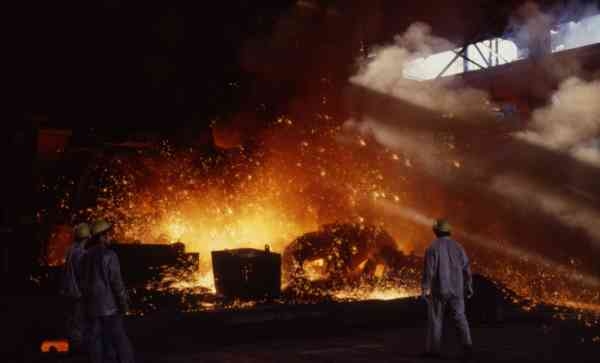
Another research direction in the field of Japanese ironmaking is to work on reducing CO2 emissions. To this end, Japan built a new coking plant based on the coking technology "SCOPE21". In addition, a consortium of Japanese steel producers is using the "COURSE50" technology to study other ways of operating to reduce CO2 emissions.
South Korea
South Korea's blast furnace ironmaking is facing the challenge of high raw material prices, and Posco has developed the steel industry by importing low-cost raw materials. South Korea's hot metal production has grown sharply, and Table 1 lists some of the current indicators for Korea's POSCO (including Finex production) and Hyundai Steel.
North American Free Trade Agreement Organization
Dr. Poveromo from North America reviewed iron-making raw materials and iron-making technology in the United States, pointing out that blast furnaces can use cheap natural gas obtained from shale deposits, and based on the production of sponge iron, increase the amount of gas flowing into and returning from blast furnaces ( Nucor Steel is currently planning to build this project). At present, NAFTA natural gas prices are low, and the use of coal in blast furnace production will not be greatly developed in the near future.
With funding from the American Iron and Steel Institute, the University of Utah has developed a new technology, flash ironmaking, which involves direct gas reduction of iron oxides in a flash reduction process. Compared with the current blast furnace technology, this technology is expected to reduce fuel consumption by 32%-57% and CO2 emissions by 61%-96%. The new process utilizes gases such as natural gas, hydrogen, syngas or a mixture of these gases as reducing agents, producing iron as a feedstock for the steelmaking process or as part of a continuous direct steelmaking process.
Development of alternative technologies for blast furnace ironmaking
Dr. Lungen of the German Iron and Steel Association summarizes the rapid development of alternative technologies for blast furnace ironmaking in recent decades: 72 direct reduction ironmaking systems and 59 smelting reduction ironmaking systems, each of which in some form Industrialized production was realized. However, the blast furnace ironmaking process is still the main body of ironmaking. How a region or a company chooses the right smelting process depends on many factors such as iron ore price and availability, ore quality, coking coal availability and cost, import and export prices of natural gas, coke oven gas, blast furnace gas and electricity , and the cost of CO2 emissions, etc.




 15358968703